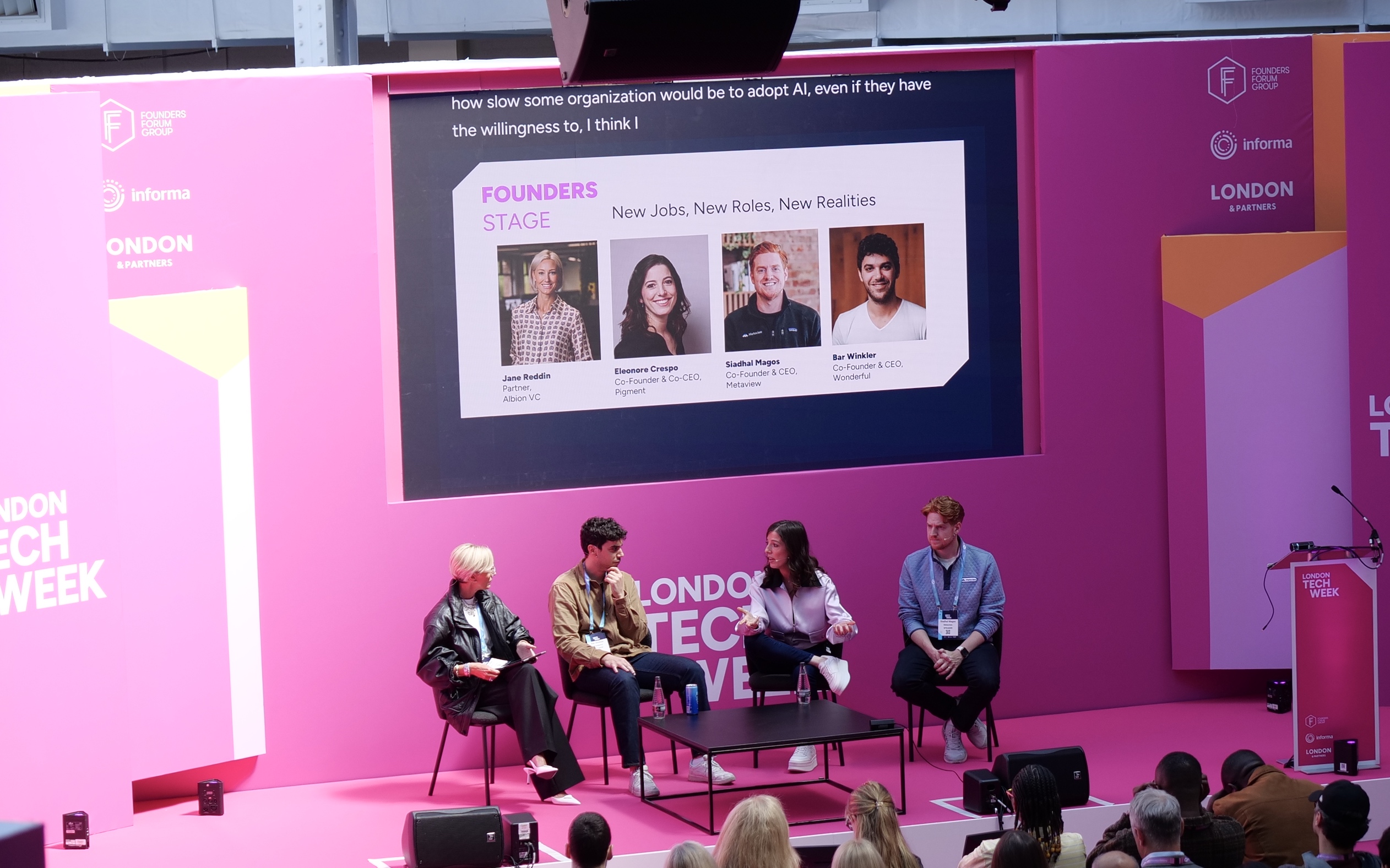
Most live events are designed around a primary language.
Sometimes that language is English. Sometimes it’s Spanish. Sometimes it depends on the region hosting the event.
But here’s the question most organizers don’t ask early enough:
What if your event doesn’t actually have a “primary” audience anymore?
What if your speakers are rotating between English, Spanish, and French?
What if your attendees are joining from five continents?
What if language isn’t a one-directional problem, but a multidirectional one?
This is where multilingual source translation becomes more than a feature. It becomes infrastructure.
What Multilingual Source Translation Actually Means
Multilingual source translation is often misunderstood as “English translated into multiple languages.”
That’s only one version of it. True multilingual source translation means any source language can be translated into any target language in real time.
For example:
- A keynote delivered in English can be translated into Spanish, French, Arabic, and Japanese.
- A panel that shifts into Spanish can simultaneously be translated back into English and French.
- A French speaker can be understood instantly by attendees listening in Arabic or Japanese.
- Multiple source languages within the same event can all be translated between each other and into additional languages beyond them.
There’s no fixed “hub” language.There’s no forced dependency on English as the bridge. The question shifts from “What language are we translating from?” to “How many language pathways should we unlock?” and that changes how global events are designed.
The Hidden Limitation in Traditional Language Models
Historically, multilingual events required heavy logistical planning.
If you had three source languages and five audience languages, you weren’t just adding complexity, you were multiplying it. Interpreter booths, routing, hardware distribution, language-specific channels, backup redundancy. Every added language increased operational weight.
So most teams made a compromise. They picked a dominant language and translated outward from there, limiting the number of supported languages to what felt operationally manageable.
But let’s pause on that. Was the limitation strategic? Or was it logistical? When language strategy is shaped by physical constraints, audience experience often becomes secondary to feasibility.
Multilingual source translation removes that constraint.
When Language Becomes Infrastructure Instead of a Service
When translation is software-driven and cloud-distributed, the model shifts.
Instead of thinking in terms of interpreter staffing per language pair, you think in terms of scalable language pathways. Instead of building separate silos for each translation direction, you centralize the source audio and expand outward dynamically.
This matters most when events are no longer linear.
Consider a global leadership summit where:
- A U.S. executive presents in English.
- A regional director from Mexico responds in Spanish.
- A European panelist contributes in French.
- Audience Q&A arrives from multiple regions in mixed languages.
Without a multidirectional model, comprehension breaks down quickly. Someone is always listening in a secondary language. Someone is always translating mentally. Someone is slightly behind.
With multilingual source translation, each participant can engage in their preferred language, regardless of who is speaking.
So the better question becomes: What happens to participation when language friction disappears in both directions?
The Cognitive Load Most Events Ignore
When attendees are forced to listen in a non-native language, even if they’re fluent, something subtle happens.They process content more slowly, they miss nuance and fatigue faster. Over a 60-minute keynote or a two-hour strategy session, that cognitive tax adds up.
Now imagine the same experience where attendees can access real-time captions in their chosen language via QR or web, listen to dubbed audio in their preferred language and switch languages instantly when needed.
No headsets. No waiting in line. No navigating hardware. Just immediate access.
If comprehension becomes effortless, engagement rises naturally, not because the content changed but rather because the audience can fully absorb it.
What This Means for Event Strategy
The real shift isn’t technical. It’s strategic. When any source language can translate to any other, you stop designing events around a linguistic hierarchy. You don’t have to centralize content in one “master” language or marginalize regional speakers, and you don’t have to simplify discussions for fear that translation pathways can’t keep up.
You can let speakers speak naturally and include more voices without worrying that understanding will fragment. This not only changes the tone of global collaboration, but it changes who feels empowered to contribute and who feels like the event was built for them.
And if your brand positions itself as global, inclusive, and connected, shouldn’t your language model reflect that?
The Reliability Question (Because Live Is Unforgiving)
Of course, none of this matters if it isn’t stable under live-event pressure.
Live events demand:
- Low latency
- Seamless transitions when speakers switch languages
- Consistent terminology
- Delivery across multiple surfaces simultaneously
When built properly, multilingual source translation doesn’t add fragility - it reduces it. Instead of managing multiple parallel interpretation chains, you centralize the intake and scale distribution outward. The fewer disconnected systems you manage, the fewer points of failure you introduce.
And in live production, simplicity at scale is what creates reliability.
A Different Way to Frame the Decision
Instead of asking:
“Do we need multilingual translation?”
Consider asking:
- Are we unintentionally limiting participation because of language directionality?
- Are we forcing English to be the default bridge when it doesn’t have to be?
- If any language could translate to any other, would we structure our programming differently?
- How much broader would our reach be if comprehension was instant and invisible?
Multilingual source translation isn’t just about translating English outward. It’s about removing the idea of a linguistic center altogether. When every language can connect to every other language, something shifts. Your event stops feeling regional with add-ons. It starts feeling truly global by design.