FIFA World Cup 2026: Making Live Football More Accessible with SyncWords
How one SyncWords captioning workflow put live match commentary on Fan Zone screens, in stadium seats and inside the FIFA World Cup 2026 app.
The FIFA World Cup 2026 brought together millions of football fans across the United States, Canada and Mexico. For fans who are Deaf or hard of hearing, timely and accurate access to live match commentary was an important part of a more inclusive viewing experience.
SyncWords built a live closed-captioning workflow that made match commentary accessible across several viewing environments: large public Fan Zones, spectators inside the stadiums, and fans following along through the FIFA World Cup 2026 mobile experience.
The solution combined live feed contribution, SRT streaming, AI speech recognition, sports-specific vocabulary, CEA-608 closed captioning, cloud-based web delivery and mobile app integration into one live accessibility platform, built to support matches throughout the tournament with captions that keep pace with the action. You can also read the FIFA World Cup 2026 case study for the summary version.
The challenge
Live sports are one of the most demanding environments for automated captioning. Football commentary moves quickly and is full of player names from around the world, team and stadium names, football terminology, statistics, rapid play-by-play and frequent changes of speaker and pace.
At the same time, accessibility for a global sporting event has to reach beyond the traditional television screen:
- Fans watching on a large screen at a public Fan Zone need captions integrated into the video itself.
- A spectator inside a stadium may want to follow captions privately on a mobile device.
- A fan may even want to follow the commentary from another match taking place at the same time, in a different stadium.
SyncWords needed an architecture that would generate one consistent live captioning experience while supporting several methods of distribution.
1. Live feed contribution over SRT
Live match video was contributed to SyncWords using Secure Reliable Transport (SRT), which carries broadcast-quality video reliably and with low latency across IP networks. Each incoming live feed became the source for the SyncWords live captioning workflow.
That let the captioning infrastructure work directly from the live contribution feed, with no satellite links or dedicated broadcast circuits.
2. AI captioning tuned for football
Once the SRT feed reached SyncWords, the live audio was processed by the SyncWords automated captioning platform. Before each match, the speech-recognition environment could be optimized with a dictionary of the names and terms most likely to come up in commentary.
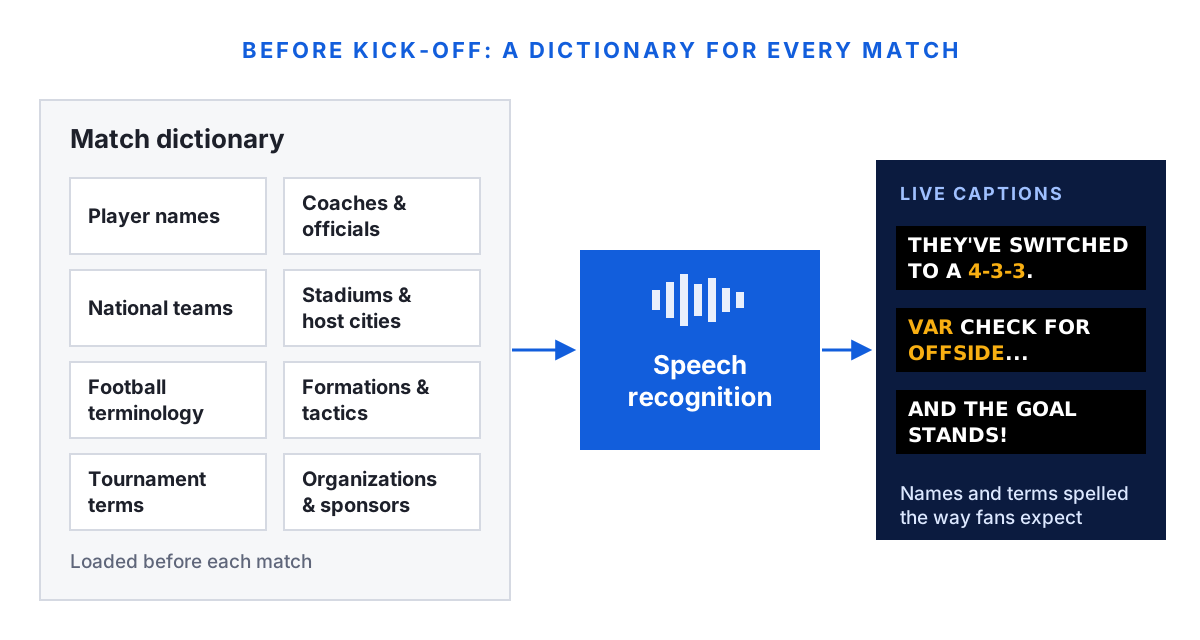
This mattered in an international tournament, where commentators constantly reference players, teams and places from many different languages and nationalities. With clean program audio and the dictionary loaded, the system recognized the names fans care about most while keeping the low latency live sport demands.
3. An ultra-low-latency SRT workflow
Latency is critical when captions accompany live sport. A caption that lands several seconds after a goal, penalty, save or referee decision takes a lot away from the experience. The SRT architecture was designed around a tightly optimized processing path.
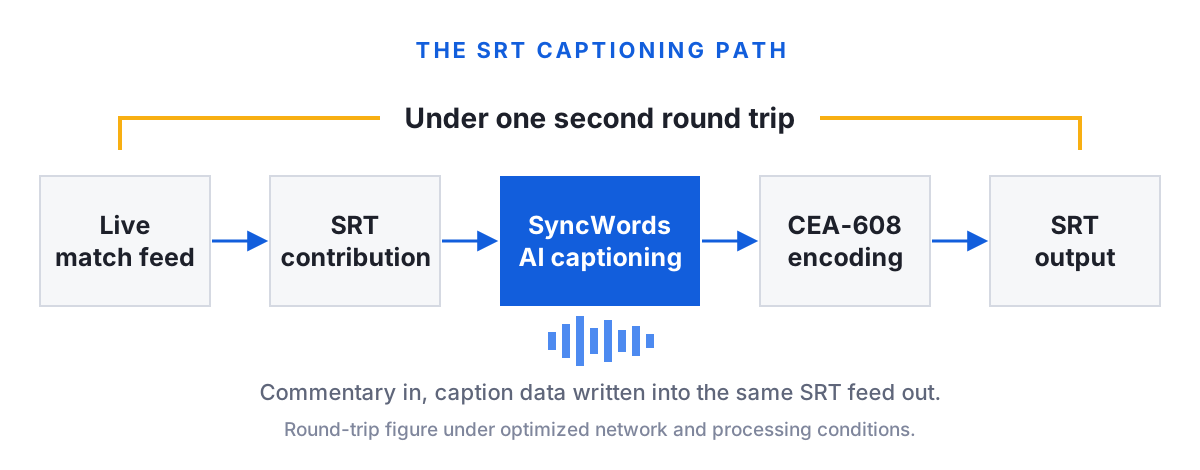
Under optimized network and processing conditions, the workflow achieved a round trip of less than one second, keeping captions closely synchronized with the commentary and the action. The resulting SRT stream could be delivered directly to whichever destination was responsible for displaying the match. More on how the different timing figures fit together is on our latency page.
4. Closed captioning for public Fan Zones
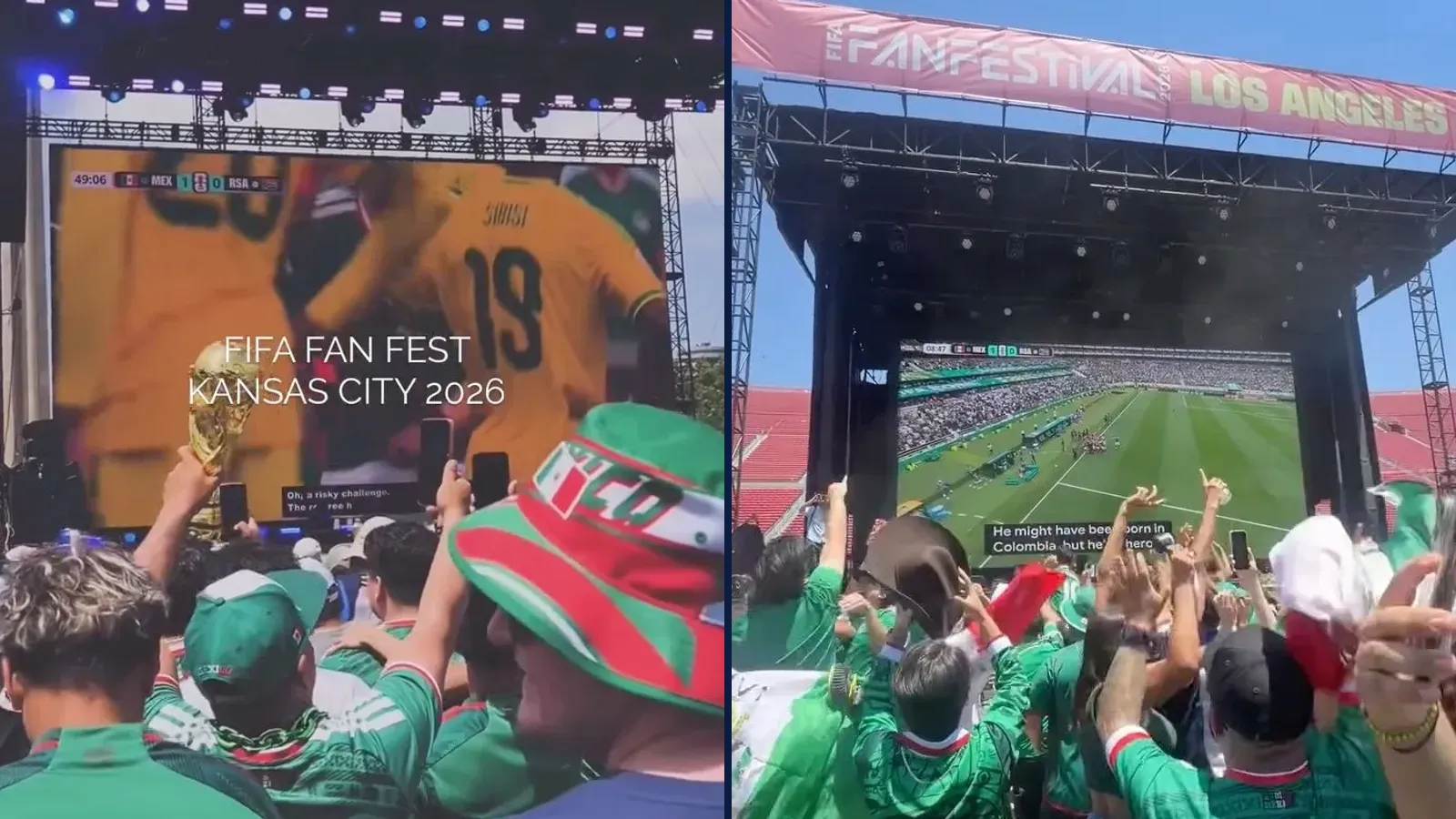
One of the main applications was live closed captioning for the public FIFA World Cup Fan Zones across the United States, Canada and Mexico.
SyncWords returned a live SRT feed carrying standard CEA-608 closed-caption data. At the Fan Zone, the captioned feed was decoded and displayed with the live video on the large screens used for public viewing.
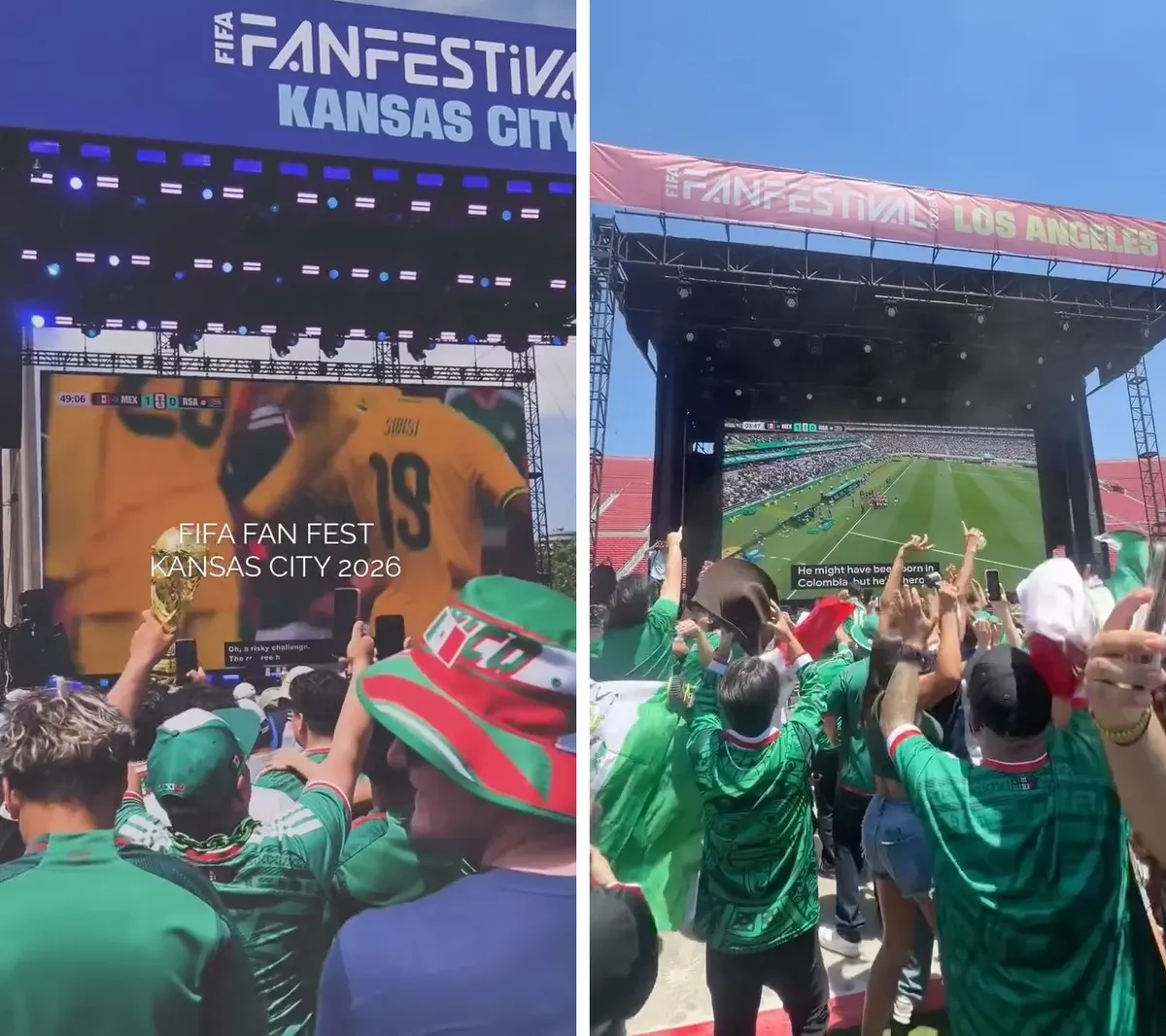
The existing professional video infrastructure carried both the match and its accessibility information. Fans who are Deaf or hard of hearing could follow the commentary and play-by-play alongside everyone else, which made for a more inclusive public viewing environment.
5. Extending accessibility inside the stadium
The project then expanded beyond the Fan Zones to spectators attending matches inside the World Cup stadiums, where the requirement was different. Rather than putting captions permanently on a stadium's main video screen, spectators needed a way to see live captions on their own phones.
SyncWords extended the same live captioning infrastructure with a web-based caption experience: each match could have its own page displaying its real-time caption stream. The same caption-generation infrastructure served broadcast-style video and web-based accessibility at the same time.
6. Integration with the FIFA World Cup 2026 mobile experience
The web-based caption experience could be integrated into the official FIFA World Cup 2026 app, so a spectator could navigate to their stadium or match and read the live captions directly on a smartphone.
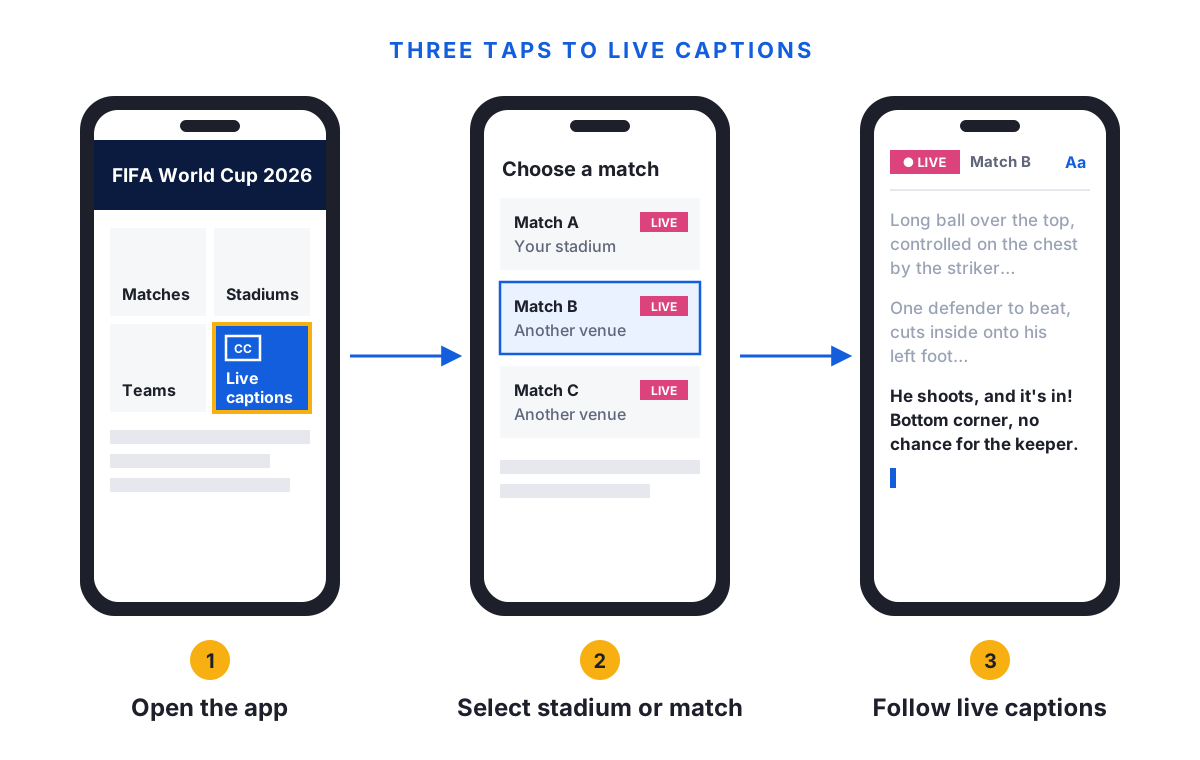
Fans didn't have to download and learn a separate accessibility app: live captions became part of the tournament's existing digital experience. The web-based approach also brought real operational flexibility, because caption experiences could be created, updated, scaled or retired in the cloud without a dedicated native captioning application. It is the same pattern as captioning a conference room through a link or QR code, scaled up to a stadium.
7. Following multiple matches in real time
With several matches often under way at different venues, the architecture unlocked one more capability. Because SyncWords could process multiple live match feeds at once, the caption experience wasn't tied to the stadium the spectator was sitting in.
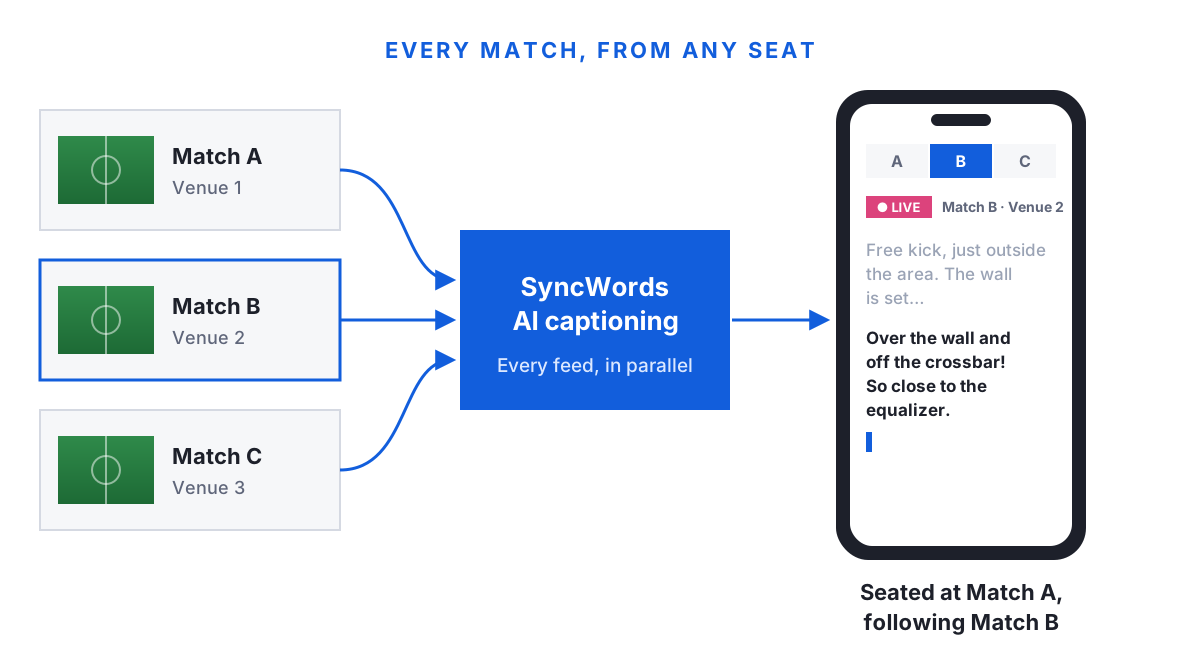
A spectator watching Match A inside the stadium could use their phone to follow the play-by-play from Match B at another venue. The platform became more than a closed-captioning service: it was a real-time text companion across the whole tournament.
One captioning platform, multiple accessibility experiences
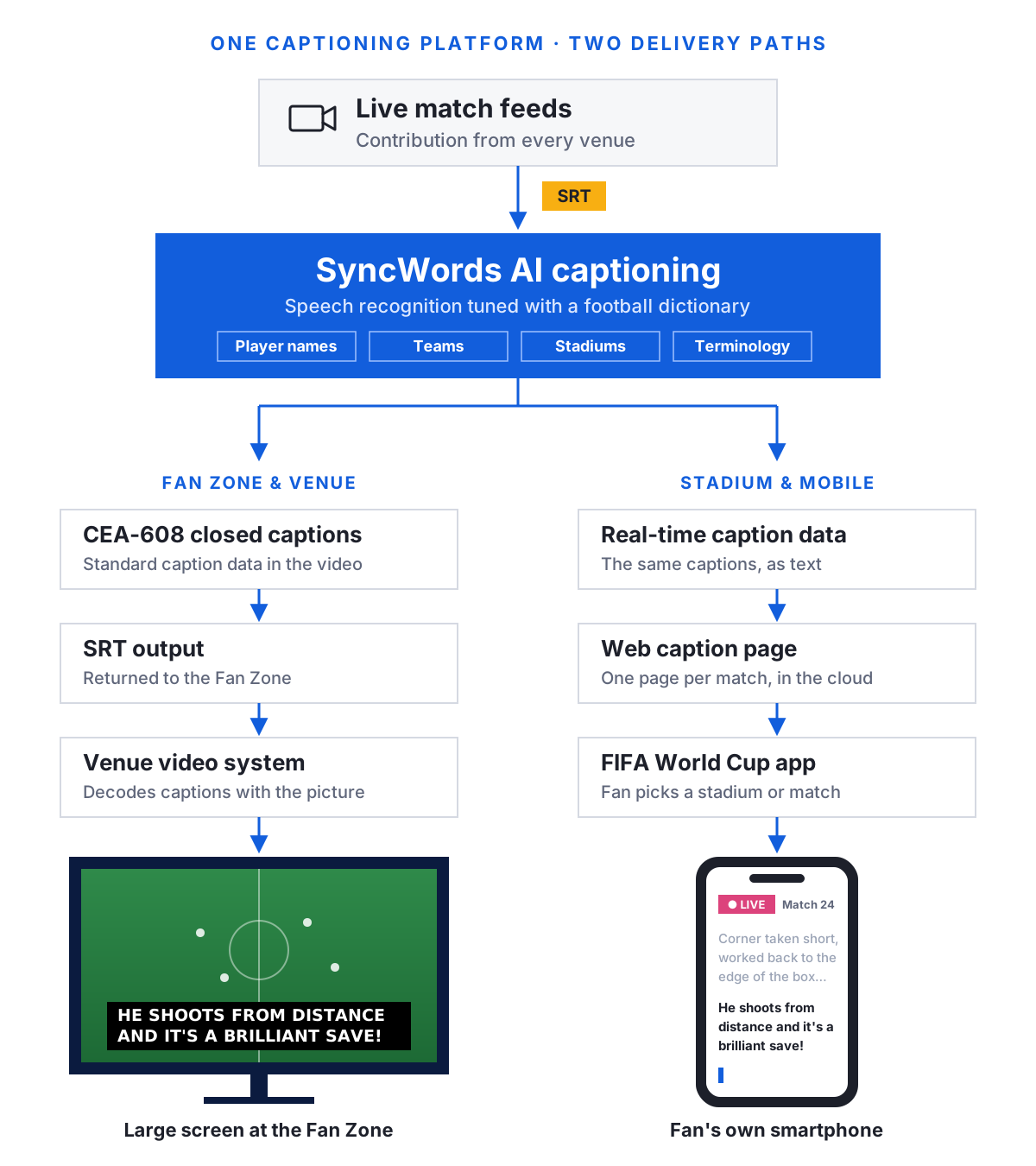
The key advantage of the architecture was generating live captions once and distributing them in several ways:
- Fan Zone and venue delivery: live feed contribution → SRT → SyncWords AI captioning → CEA-608 closed captions → SRT output → Fan Zone or venue video system.
- Stadium and mobile delivery: live feed contribution → SRT → SyncWords AI captioning → real-time caption data → web caption experience → FIFA World Cup app → the fan's smartphone.
Both experiences came from the same live captioning infrastructure, which removed the need to run separate accessibility workflows for venue video, public viewing areas, stadium spectators and mobile users.
Accessibility by design
The project showed how accessibility can be built into modern live sports infrastructure instead of being treated as a separate downstream service. Combining widely adopted technologies such as SRT and CEA-608 with AI speech recognition, cloud infrastructure, web technology and mobile experiences produced an architecture that serves traditional broadcast environments and modern digital applications alike.
Key capabilities included:
- Sub-second caption insertion into SRT streams, suited to live sport and play-by-play commentary
- Recognition accuracy supported by football-specific dictionaries and vocabulary
- Standard CEA-608 closed captioning for established video workflows
- SRT contribution and distribution over IP networks
- Web-based caption delivery for spectators using their own devices
- Mobile app integration, with no separate captioning app to install
- Multi-match accessibility, so fans can follow the commentary from other matches in progress
- Scalable cloud deployment across multiple venues, cities and countries
- One unified accessibility workflow serving Fan Zones, stadiums and digital experiences
The result
The FIFA World Cup 2026 deployment showed how professional live video infrastructure and AI accessibility technology can work together to make one of the world's largest sporting events more inclusive.
A workflow first designed to caption public Fan Zones grew into a broader accessibility platform serving spectators across multiple World Cup experiences. From a large outdoor screen at a Fan Zone to a smartphone inside a stadium, the same SyncWords infrastructure provided access to live match commentary.
More importantly, it showed that accessibility doesn't need to be tied to a single screen, broadcast format or viewing environment. With live feed contribution, SRT transport, SyncWords AI captioning, CEA-608 closed captioning, cloud-based web delivery and accessible mobile design, live captions can follow fans wherever they choose to experience the tournament.
Live match → SRT → SyncWords AI captioning → CEA-608 / web → Fan Zone, stadium and mobile.
One live captioning platform. Every match. Multiple viewing experiences. A more accessible World Cup.
Planning live captions for a tournament, a venue or a season? See how SyncWords handles live sports, or book a demo with your own feed.
Caption your live sport, from the big screen to every phone
Book a demo